Friday, September 24, 2010
Recent Post, Guest Blog
Please check out my most recent post, A Soldiers Speaks (Sort of), for Nicholas D. Kristof of the New York Times.


Tuesday, September 21, 2010
Back to Kavingu
I haven't been to the Kavingu Girl-Mother center in a while, and I miss the girls. Things have been a bit hectic the past few days. I spent an entire day searching for cartons of notebooks for the kids. The school year has begun and the streets and villages are once again flooded with little nuggets in blue pants and white shirts.
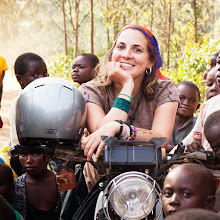
Last week, at the end of the Crosier driveway, a young boy was riding a motorcycle too fast and without a helmet on, when he nicked the back of a large truck and disappeared. Brother Maurice told me in the morning.
-I didn't go close enough to see the body on the road, he said. I didn't want that image in front of my eyes.
When I left the house later that day, men from the village were covering the blood with shovels and sand. I stood there and imagined the boys youthful recklessness, ending in nothing. Motorcycles are the cheapest and most viable transportation here, but nobody wears helmets, everyone drives too fast and every ten feet is another blind turn. Younger boys typically drive the fastest, and often with three or four friends crammed onto the seat behind them. At least this boy was driving alone. As I leave the house for Butembo and drive past the spot where the boy disappeared, I realize how strange it is to start every day thinking about death.
At the COPERMA office, Urbain and an apprentice student named Pascal are inside reading through several documents. Pascal is very handsome and always extremely well dressed. He's currently reading about how to most effectively breed rabbits. The twelve that we bought for the people in Isale are all currently pregnant.
We all start chatting about nothing at all. Urbain starts in on me again about having babies. I've explained I'm not even close to ready for that, and am not sure if I want kids at all, unless they're adopted.
-You have to have kids! He says with his usual devilish smirk. For every four kids I have, you have to have one.
-What? Why?
-I don't know, just because.
-Okay, well you have two kids right now, so when you make it to four, you let me know and I"ll re-evaluate.
Pascal is laughing at us, still pretending to be reading about rabbits.
-Oh, Urbain, I met Hangie's family yesterday. We were talking about Gladys.
Gladys is Urbain's oldest daughter. She's a three-year-old firecracker. When Urbain and his wife invited me over for dinner, Gladys spent the entire two hours running in and out of the house, eagerly reporting on the bad deeds of all the children outside.
-Daddy, the kids are getting in the back of the car! But I can't kick them out because I'm not big enough. Why can't I be big like you right now? She yelled and stomped around the house, occasionally dropping to the floor in a mini-tantrum.
-She is a little character, I say to Urbain.
His face explodes into a smile.
-Yeah, she's a good one, he says, laughing.
I can't help smiling too; I love fatherly love. Especially here, where the evil in some men is beautifully balanced by the strength and love of the rest.
-I think I'm going to name my next daughter Gladay, he says.
-Gladay? Gladys and Gladay? Why do you want to name your kids practically the same thing?
-It's not the same. And I like the gluh, gluh, gluh sound. I don't know why.
We're all laughing now, even Urbain.
-You are ridiculous.
Suddenly, Hangie bursts in through the front door. He greets me quickly and sits down in a huff. All of us are looking at him.
-How would you describe the security here? If you needed to explain it, what would you say? He asks, looking at me.
-I would say, it's safe during the day but as soon as evening comes it flits out the window. Wooop! Like that. Soldiers turn into monsters and everything goes to hell.
They all laugh at my animations.
-Well said, says Urbain. Very direct.
-Although, I guess I would add, during the daytime it's only safe if you can avoid soldiers, there is no active confrontation, and nobody important was murdered the night before.
The group nods in more solemn agreement.
-Why do you ask?
-Someone from Germany was asking me about it and I couldn't figure out how to explain it.
The security here is like an adolescent going through an identity crisis. We're not laughing anymore. Maman Marie walks in right on cue. She hasn't been feeling well for a few days but has been driving out to Kavingu and Magherya with the potato root seeds that we bought. She even went to Magherya on a Sunday, which is unheard of in Catholic territory.
-We need to get going, I say. It's already 2 p.m. and we'll only have an hour in Kavingu if we don't leave right away.
Maman Marie agrees with me and we get into the truck with Urbain. Urbain often comes along to help Maman Marie, but also to translate the Kinande for me. As we're leaving the semi-smooth streets of Butembo, Maman Marie turns to me from the front seat.
-I have a good story to tell you! She's a bit ill, but looks as strong and eager as ever. When President Kabila was here last week, he drove down this road. He left Luotu at 6 p.m., so obviously the soldiers had already set up their barriers to steal from people. When he got to the first barrier, the soldiers threatened the car and tried to rob him!
-What? I say, laughing. FRDC soldiers tried to rob their own President? I love it.
-But he has a group of body guards, of course, so they chased the soldiers. There were three and they only caught one, but he's in prison now.
We're all laughing at the absurdity of it all.
-That is a great story. I love that. I'm sure he already knows, but now he can't deny how lawless his stupid soldiers are.
President Joseph Kabila Kabange came to Butembo last week to see the condition of the roads and supposedly lay the first stone of pavement. That wouldn't only help commerce and help ease the extreme poverty, but also make it more possible for people to get to the hospitals. I was pretty excited about it, until I heard that the road will stretch only 15 km, starting from the front door of his estate in Musienene and ending just inside the limits of Butembo; a Presidential drive-way.
When we get to Kavingu, the kids immediately swarm the car and fill the truck bed. I get out a little group of them follows me and stands in a circle of confusion, staring, from a distance, at my skin. I notice a little boy, maybe two years old standing off on his own crying. He's holding a wire attached to a toy car made out of dirty Styrofoam. The wheels don't exactly turn, but it follows him around nicely. He is crying pretty hard and I take a step towards the little nugget to pick him up. Immediately, his cries click up a few notches into terrified screams. I step back again, but the damage is already done. A monster in white is not easy for a two year old to understand. One of the other children walks over to him and with the touch of a single comforting hand the boy stops crying.
I turn back towards the small concrete buildings. One of the buildings is the classroom. It's made out of the usual horizontal carpet of sticks and mud, but there are already several holes in the walls. School has only been back in session a week, and the walls are already starting to crumble. I enter the concrete room where the girl-mothers are sewing. Inside the dark room there are about 6 black and silver sewing machines. There are two or three girls stationed at each sewing machine, working on various colors of cloth. The two formateurs are here as well, walking through, chatting with the girls and pointing out mistakes. The girls all look so happy.
We came out today mostly so that Maman Marie could show a video to the girls on the existence and effects of STDs/HIV. She immediately opens the little portable DVD player we just bought in Butembo and gets things going. The girls leave their sewing stations, chattering to each other and Maman Marie in Kinande. The door opens behind me and a flood of children sweeps into the room. In less than four seconds the number of people crowded around the tiny player has quadrupled. I'm not sure what language the DVD is in, everyone is chatting to loudly to hear it, but Maman Marie shouts memorized lines over the crowd as scenes flash through images and statistics of sexually transmitted diseases.
It doesn't seem the most effective way of doing this, but Maman Marie tells me that at the end of the film she asks the girls and boys if they will try to go to the hospital to get tested and treated; they always say yes. I go back outside and watch Urbain play around with the kids. He patiently lifts them into and out of the truck bed. I wish I could do that, it looks fun, but everyone would simply scatter and the fun would be over.
When Maman Marie has finished in the room with the girl-mothers, we all get immediately into the car. It's only four p.m but it takes an hour to get back to Butembo, and then 30 minutes for me to return to Musienene, which leaves a 30 minute cushion before the soldiers start really getting ready for the night. We get back to Butembo without any problems, the car doesn't even break down once, which is a treat. I immediately get on my motorcycle and chase the sun to the horizon.
When I pull up to the house, I approach the spot with fresh dirt, and remember the boy who's head was opened on the road. Occupying the same space where someone has lost their life is a strange thing.
At dinner, Brother Anselme says that an over-burdened truck tipped over just outside of Butembo, 10 people were killed. I'm getting used to this feeling of having death around all the time. It's like having another person sitting at the dinner table, by now.
Last week, at the end of the Crosier driveway, a young boy was riding a motorcycle too fast and without a helmet on, when he nicked the back of a large truck and disappeared. Brother Maurice told me in the morning.
-I didn't go close enough to see the body on the road, he said. I didn't want that image in front of my eyes.
When I left the house later that day, men from the village were covering the blood with shovels and sand. I stood there and imagined the boys youthful recklessness, ending in nothing. Motorcycles are the cheapest and most viable transportation here, but nobody wears helmets, everyone drives too fast and every ten feet is another blind turn. Younger boys typically drive the fastest, and often with three or four friends crammed onto the seat behind them. At least this boy was driving alone. As I leave the house for Butembo and drive past the spot where the boy disappeared, I realize how strange it is to start every day thinking about death.
At the COPERMA office, Urbain and an apprentice student named Pascal are inside reading through several documents. Pascal is very handsome and always extremely well dressed. He's currently reading about how to most effectively breed rabbits. The twelve that we bought for the people in Isale are all currently pregnant.
We all start chatting about nothing at all. Urbain starts in on me again about having babies. I've explained I'm not even close to ready for that, and am not sure if I want kids at all, unless they're adopted.
-You have to have kids! He says with his usual devilish smirk. For every four kids I have, you have to have one.
-What? Why?
-I don't know, just because.
-Okay, well you have two kids right now, so when you make it to four, you let me know and I"ll re-evaluate.
Pascal is laughing at us, still pretending to be reading about rabbits.
-Oh, Urbain, I met Hangie's family yesterday. We were talking about Gladys.
Gladys is Urbain's oldest daughter. She's a three-year-old firecracker. When Urbain and his wife invited me over for dinner, Gladys spent the entire two hours running in and out of the house, eagerly reporting on the bad deeds of all the children outside.
-Daddy, the kids are getting in the back of the car! But I can't kick them out because I'm not big enough. Why can't I be big like you right now? She yelled and stomped around the house, occasionally dropping to the floor in a mini-tantrum.
-She is a little character, I say to Urbain.
His face explodes into a smile.
-Yeah, she's a good one, he says, laughing.
I can't help smiling too; I love fatherly love. Especially here, where the evil in some men is beautifully balanced by the strength and love of the rest.
-I think I'm going to name my next daughter Gladay, he says.
-Gladay? Gladys and Gladay? Why do you want to name your kids practically the same thing?
-It's not the same. And I like the gluh, gluh, gluh sound. I don't know why.
We're all laughing now, even Urbain.
-You are ridiculous.
Suddenly, Hangie bursts in through the front door. He greets me quickly and sits down in a huff. All of us are looking at him.
-How would you describe the security here? If you needed to explain it, what would you say? He asks, looking at me.
-I would say, it's safe during the day but as soon as evening comes it flits out the window. Wooop! Like that. Soldiers turn into monsters and everything goes to hell.
They all laugh at my animations.
-Well said, says Urbain. Very direct.
-Although, I guess I would add, during the daytime it's only safe if you can avoid soldiers, there is no active confrontation, and nobody important was murdered the night before.
The group nods in more solemn agreement.
-Why do you ask?
-Someone from Germany was asking me about it and I couldn't figure out how to explain it.
The security here is like an adolescent going through an identity crisis. We're not laughing anymore. Maman Marie walks in right on cue. She hasn't been feeling well for a few days but has been driving out to Kavingu and Magherya with the potato root seeds that we bought. She even went to Magherya on a Sunday, which is unheard of in Catholic territory.
-We need to get going, I say. It's already 2 p.m. and we'll only have an hour in Kavingu if we don't leave right away.
Maman Marie agrees with me and we get into the truck with Urbain. Urbain often comes along to help Maman Marie, but also to translate the Kinande for me. As we're leaving the semi-smooth streets of Butembo, Maman Marie turns to me from the front seat.
-I have a good story to tell you! She's a bit ill, but looks as strong and eager as ever. When President Kabila was here last week, he drove down this road. He left Luotu at 6 p.m., so obviously the soldiers had already set up their barriers to steal from people. When he got to the first barrier, the soldiers threatened the car and tried to rob him!
-What? I say, laughing. FRDC soldiers tried to rob their own President? I love it.
-But he has a group of body guards, of course, so they chased the soldiers. There were three and they only caught one, but he's in prison now.
We're all laughing at the absurdity of it all.
-That is a great story. I love that. I'm sure he already knows, but now he can't deny how lawless his stupid soldiers are.
President Joseph Kabila Kabange came to Butembo last week to see the condition of the roads and supposedly lay the first stone of pavement. That wouldn't only help commerce and help ease the extreme poverty, but also make it more possible for people to get to the hospitals. I was pretty excited about it, until I heard that the road will stretch only 15 km, starting from the front door of his estate in Musienene and ending just inside the limits of Butembo; a Presidential drive-way.
When we get to Kavingu, the kids immediately swarm the car and fill the truck bed. I get out a little group of them follows me and stands in a circle of confusion, staring, from a distance, at my skin. I notice a little boy, maybe two years old standing off on his own crying. He's holding a wire attached to a toy car made out of dirty Styrofoam. The wheels don't exactly turn, but it follows him around nicely. He is crying pretty hard and I take a step towards the little nugget to pick him up. Immediately, his cries click up a few notches into terrified screams. I step back again, but the damage is already done. A monster in white is not easy for a two year old to understand. One of the other children walks over to him and with the touch of a single comforting hand the boy stops crying.
I turn back towards the small concrete buildings. One of the buildings is the classroom. It's made out of the usual horizontal carpet of sticks and mud, but there are already several holes in the walls. School has only been back in session a week, and the walls are already starting to crumble. I enter the concrete room where the girl-mothers are sewing. Inside the dark room there are about 6 black and silver sewing machines. There are two or three girls stationed at each sewing machine, working on various colors of cloth. The two formateurs are here as well, walking through, chatting with the girls and pointing out mistakes. The girls all look so happy.
We came out today mostly so that Maman Marie could show a video to the girls on the existence and effects of STDs/HIV. She immediately opens the little portable DVD player we just bought in Butembo and gets things going. The girls leave their sewing stations, chattering to each other and Maman Marie in Kinande. The door opens behind me and a flood of children sweeps into the room. In less than four seconds the number of people crowded around the tiny player has quadrupled. I'm not sure what language the DVD is in, everyone is chatting to loudly to hear it, but Maman Marie shouts memorized lines over the crowd as scenes flash through images and statistics of sexually transmitted diseases.
It doesn't seem the most effective way of doing this, but Maman Marie tells me that at the end of the film she asks the girls and boys if they will try to go to the hospital to get tested and treated; they always say yes. I go back outside and watch Urbain play around with the kids. He patiently lifts them into and out of the truck bed. I wish I could do that, it looks fun, but everyone would simply scatter and the fun would be over.
When Maman Marie has finished in the room with the girl-mothers, we all get immediately into the car. It's only four p.m but it takes an hour to get back to Butembo, and then 30 minutes for me to return to Musienene, which leaves a 30 minute cushion before the soldiers start really getting ready for the night. We get back to Butembo without any problems, the car doesn't even break down once, which is a treat. I immediately get on my motorcycle and chase the sun to the horizon.
When I pull up to the house, I approach the spot with fresh dirt, and remember the boy who's head was opened on the road. Occupying the same space where someone has lost their life is a strange thing.
At dinner, Brother Anselme says that an over-burdened truck tipped over just outside of Butembo, 10 people were killed. I'm getting used to this feeling of having death around all the time. It's like having another person sitting at the dinner table, by now.
Saturday, September 18, 2010
Recent Post, Guest Blog
Please check out my most recent post, Notes from a Young American in Congo: Caffeine! for Nicholas D. Kristof of the New York Times.
Thursday, September 16, 2010
Questions and Answers
I want, more than anything, for this problem to stop growing. Every time I think I understand the bigger picture, that I've reached the bottom of the stairs, the last step drops out from under me and everything just keeps falling. I help a few women who were raped, and I feel their hope and happiness flow through me; then on the way home I speak to someone like Kambale, who joined the army when he was ten years old, because CNDP soldiers started cutting off his arms.
He's young, he looks like he's still a teenager but he tells me he's twenty-one; he's been killing and pillaging for eleven years. He pulls up the sleeves of his army green uniform to show me the thick scars in the creases of each arm. I look at his face, as his Superior Officer, Muhindo, speaks to me. I don't listen to the lies he's telling me. He's speaking in a mixture of Swahili and Lingala, the language of the Western regions around the capital city of Kinshasa. Urbain is translating for me. The soldier speaks for several minutes at a time before letting Urbain convey the message to me.
So, I have plenty of time to look at Kambale. His eyelashes are thick and curl away beautifully from a set of very deep eyes. He's very pretty. He notices me looking at him and shifts his gaze around nervously. I make this soldier uncomfortable; this man with an AK-47 slung over his shoulder is nervous because I'm looking at him. I tune back in to what Muhindo and Urbain are saying. I just asked Muhindo what he is fighting for, since I don't see anything but greed and cruelty in this war; men using chaos as an excuse to let go of their humanity.
-The objective, says Urbain when Muhindo is finished, is so that Congo can be in peace.
-So, you're fighting to protect the Congolese people? I ask.
-Yes, to protect them from the insecurity in this area.
You are the insecurity.
The man has big teeth and bad skin. He's an officer so his army green has two flaps of navy blue on the shoulders. He smiles as he speaks and it's misleading.
-I've heard that a lot of the FRDC soldiers in this area are causing problems for the people, by stealing and raping.
Muhindo shifts his weight at the word viole, but maintains his composure well. His gun is pointing directly down at Urbain's foot.
-A lot of things go through my mind when I hear that, he says. It's not all soldiers who do those things. My unit doesn't do that, we're here to protect.
It's amazing how people can lie so easily. His unit is the 18th brigade and there's a woman dying in the hospital right now, because one of his men wanted to feel powerful for a few minutes. I want to slap him, but I just shake my head.
-What about rape? I talk to a lot of women who have been raped by FRDC soldiers. What do you think about that?
-When? Here?
-Yes, here. In the last few months.
-No, that's not possible. If a soldier rapes, he can be blindfolded and shot. Depending on the crime, he will at least be taken to prison.
-And what do you think? I ask, turning to Kambale.
He laughs nervously and looks to his Superior.
-A man who is guilty must be judged, he says.
He's still laughing. I wish I had talked to him alone. I feel like he wants to tell me things that are true, he doesn't want to be here wearing army green, not knowing where his family is. He told me when we first started speaking that he's tired, he's wanted to leave the army for a long time. Muhindo said that he can leave whenever he wants to, but Kambale silently shook his head.
-So, you're telling me that FRDC soldiers in this region don't rape women?
-I know one solder who raped a woman, Muhindo says. He's in jail now, for twenty-five years.
He says it like it's an example that will erase everything I've heard and seen. He knows that I know he's lying; it's just a game for him now.
-You can be honest with me, I mean, when there's an affrontement, things are really chaotic, and it's war after all. It would make sense if soldiers ended up raping a few women.
I hear the words flow smoothly and easily out of my mouth; I don't recognize myself. I'm a good liar too, it seems. Muhindo doesn't take the bait.
-No, we don't rape. We are allowed to take one woman, but no one outside of her. When we know what woman we want, we can get a letter from our Colonel and he will go with us to the home of her family. Then she becomes our wife. But we will be punished for sleeping with anyone else.
I've already been pushing things a little farther than I should. I don't explain to him that this is just extended rape. I'm laughing with him and acting like we're buddies. I need to do it, to try and get him to give me some more insight without him feeling threatened, but it's making me sick.
-Do you have a wife that you picked with the Colonel's help? I ask Kambale, still listening silently on my left.
-Yes, she's pregnant.
-Congratulations!
He smiles slightly and says thank you. He still won't look me in the eyes for more than a flicker of a second.
-I have three children says Muhindo, quickly, as if to show up his subordinate.
Urbain's phone starts ringing in his pocket. He pulls it out and I glare at him. Muhindo is watching him, clearly annoyed. Urbain puts the phone back in his pocket as the electronic rhythm comes to an end. Muhindo relaxes.
They're not giving us any actual information and it's getting close to dark. I thank Muhindo and Kambale enthusiastically and tell them I will bring several boxes of cigarettes tomorrow. Kambale's face lights up. I don't even know what to do with this man with the scars in his arms, who should still be a boy.
The truck is waiting a few meters down the road, with Maman Marie and the group of apprentice students standing in the back. In the car, I tell Maman Marie that the soldiers just lied through their teeth. Sylvain is also in the car and tells me it will be almost impossible to find a soldier who will tell the truth. After killing, torturing and raping, I guess lying wouldn't raise a moral red flag.
-I called Urbain because we need to leave now, Maman Marie says, as the driver starts up the car.
-What's wrong?
-You probably didn't see the man who walked by while you were talking. He is a soldier in this brigade but he is off duty so he wasn't wearing the uniform. He asked the driver if I was a woman who runs an aid organization in Beni. She has lied a couple of times to avoid giving the small amount of money to the soldiers at the road barriers, and they are looking for her to kill her.
-They thought it was you?
-Yes, but the driver told them no, it's not her. The soldier didn't seem to believe him, so we had to leave immediately.
-They want to kill her because she didn't give them the 20 cents at the road barrier?
-Yes! They are bandits.
-I'd better remember to bring those cigarettes, I mutter to myself. I'm exhausted and overwhelmed. I feel bad for the ten year old boy having his arms cut-off and being forced to give up his life. I hate him at the same time, because I know he's raped at least one woman, killed many and probably tortured in a similar way to what he experienced. I'm annoyed because they both acted like saviors. And I'm mad at myself for putting Maman Marie and all of the students in palpable danger, all because I wanted a few answers. Which, I didn't get anyway; just more questions.
He's young, he looks like he's still a teenager but he tells me he's twenty-one; he's been killing and pillaging for eleven years. He pulls up the sleeves of his army green uniform to show me the thick scars in the creases of each arm. I look at his face, as his Superior Officer, Muhindo, speaks to me. I don't listen to the lies he's telling me. He's speaking in a mixture of Swahili and Lingala, the language of the Western regions around the capital city of Kinshasa. Urbain is translating for me. The soldier speaks for several minutes at a time before letting Urbain convey the message to me.
So, I have plenty of time to look at Kambale. His eyelashes are thick and curl away beautifully from a set of very deep eyes. He's very pretty. He notices me looking at him and shifts his gaze around nervously. I make this soldier uncomfortable; this man with an AK-47 slung over his shoulder is nervous because I'm looking at him. I tune back in to what Muhindo and Urbain are saying. I just asked Muhindo what he is fighting for, since I don't see anything but greed and cruelty in this war; men using chaos as an excuse to let go of their humanity.
-The objective, says Urbain when Muhindo is finished, is so that Congo can be in peace.
-So, you're fighting to protect the Congolese people? I ask.
-Yes, to protect them from the insecurity in this area.
You are the insecurity.
The man has big teeth and bad skin. He's an officer so his army green has two flaps of navy blue on the shoulders. He smiles as he speaks and it's misleading.
-I've heard that a lot of the FRDC soldiers in this area are causing problems for the people, by stealing and raping.
Muhindo shifts his weight at the word viole, but maintains his composure well. His gun is pointing directly down at Urbain's foot.
-A lot of things go through my mind when I hear that, he says. It's not all soldiers who do those things. My unit doesn't do that, we're here to protect.
It's amazing how people can lie so easily. His unit is the 18th brigade and there's a woman dying in the hospital right now, because one of his men wanted to feel powerful for a few minutes. I want to slap him, but I just shake my head.
-What about rape? I talk to a lot of women who have been raped by FRDC soldiers. What do you think about that?
-When? Here?
-Yes, here. In the last few months.
-No, that's not possible. If a soldier rapes, he can be blindfolded and shot. Depending on the crime, he will at least be taken to prison.
-And what do you think? I ask, turning to Kambale.
He laughs nervously and looks to his Superior.
-A man who is guilty must be judged, he says.
He's still laughing. I wish I had talked to him alone. I feel like he wants to tell me things that are true, he doesn't want to be here wearing army green, not knowing where his family is. He told me when we first started speaking that he's tired, he's wanted to leave the army for a long time. Muhindo said that he can leave whenever he wants to, but Kambale silently shook his head.
-So, you're telling me that FRDC soldiers in this region don't rape women?
-I know one solder who raped a woman, Muhindo says. He's in jail now, for twenty-five years.
He says it like it's an example that will erase everything I've heard and seen. He knows that I know he's lying; it's just a game for him now.
-You can be honest with me, I mean, when there's an affrontement, things are really chaotic, and it's war after all. It would make sense if soldiers ended up raping a few women.
I hear the words flow smoothly and easily out of my mouth; I don't recognize myself. I'm a good liar too, it seems. Muhindo doesn't take the bait.
-No, we don't rape. We are allowed to take one woman, but no one outside of her. When we know what woman we want, we can get a letter from our Colonel and he will go with us to the home of her family. Then she becomes our wife. But we will be punished for sleeping with anyone else.
I've already been pushing things a little farther than I should. I don't explain to him that this is just extended rape. I'm laughing with him and acting like we're buddies. I need to do it, to try and get him to give me some more insight without him feeling threatened, but it's making me sick.
-Do you have a wife that you picked with the Colonel's help? I ask Kambale, still listening silently on my left.
-Yes, she's pregnant.
-Congratulations!
He smiles slightly and says thank you. He still won't look me in the eyes for more than a flicker of a second.
-I have three children says Muhindo, quickly, as if to show up his subordinate.
Urbain's phone starts ringing in his pocket. He pulls it out and I glare at him. Muhindo is watching him, clearly annoyed. Urbain puts the phone back in his pocket as the electronic rhythm comes to an end. Muhindo relaxes.
They're not giving us any actual information and it's getting close to dark. I thank Muhindo and Kambale enthusiastically and tell them I will bring several boxes of cigarettes tomorrow. Kambale's face lights up. I don't even know what to do with this man with the scars in his arms, who should still be a boy.
The truck is waiting a few meters down the road, with Maman Marie and the group of apprentice students standing in the back. In the car, I tell Maman Marie that the soldiers just lied through their teeth. Sylvain is also in the car and tells me it will be almost impossible to find a soldier who will tell the truth. After killing, torturing and raping, I guess lying wouldn't raise a moral red flag.
-I called Urbain because we need to leave now, Maman Marie says, as the driver starts up the car.
-What's wrong?
-You probably didn't see the man who walked by while you were talking. He is a soldier in this brigade but he is off duty so he wasn't wearing the uniform. He asked the driver if I was a woman who runs an aid organization in Beni. She has lied a couple of times to avoid giving the small amount of money to the soldiers at the road barriers, and they are looking for her to kill her.
-They thought it was you?
-Yes, but the driver told them no, it's not her. The soldier didn't seem to believe him, so we had to leave immediately.
-They want to kill her because she didn't give them the 20 cents at the road barrier?
-Yes! They are bandits.
-I'd better remember to bring those cigarettes, I mutter to myself. I'm exhausted and overwhelmed. I feel bad for the ten year old boy having his arms cut-off and being forced to give up his life. I hate him at the same time, because I know he's raped at least one woman, killed many and probably tortured in a similar way to what he experienced. I'm annoyed because they both acted like saviors. And I'm mad at myself for putting Maman Marie and all of the students in palpable danger, all because I wanted a few answers. Which, I didn't get anyway; just more questions.
Tuesday, September 14, 2010
Recent Post, Guest Blog
Please check out my most recent post, Maman Marie, Local Hero for Nicholas D. Kristof of the New York Times.
Tuesday, September 7, 2010
Rotational Credit
By the end of my Goma/Bukavu trip, I have been groped by a hotel watchman, propositioned by three married men, and my camera is stolen. I miss the villages. When I arrive home in Butembo, everything is beautiful to me, even lurching across the road rather than gliding feels great. Asphalt is over-rated.
I'm eager to get back to work with COPERMA and Maman Marie, so I head there first thing the day after I'm back. They're all still hard at work and are excited to see me. There's no place like home. I promised Marcela, Devote, Stella, Noella, Hangie, Valerie and Esperance (the survivors of rape from the confrontation in Isale) that I would try to find ways to help them start small businesses, now that their fields are gone. Marcela and Devote asked for a sewing machine, Hangie asked for peanuts, Esperance wants fish, Valerie wants to sell decades old clothes imported from the United States and Canada. I feel like Santa Clause, except this kind of giving isn't fun.
In the COPERMA office we sit around in our usual brain-storming circle and talk about the best ways to distribute the gifts. I have decided on the arbitrary number of $30.00 for each woman, and although I could turn it into a micro-financing type loan, I've worked enough with these women and I want to simply give it as a gift. Maman Marie comes up with a better plan.
Rotational credit, she calls it. I'm sure it's something commonly done, but I personally have never heard of it and it sounds like a great idea. Maman Marie draws an image for me on a blank piece of computer paper as she explains the system.
-The seven survivors will be the Presidents of groups of ten.
She draws seven circles, writes the name of each of the women next to each circle, and then puts ten dashes around the circle.
-They will start with the $30.00 worth of an item, and it will be a loan, in a sense, but rather than paying us back the money, in three months, when they have made back the money plus enough to keep the business going, they will give the $30.00 to the next person in the group. There will also be interest, and each President will guard the interest--two or three dollars--that will be saved in case one of the children of the group falls ill.
I watch her hand flit across the page, making pointless little marks and scribbles. Why would I even consider just giving one person $30.00 worth of materials when it could be expanded to help seventy people instead of seven?
Maman Marie strikes again.
I give the money to Man-Hangie, as we start calling him now that there's another Hangie in the mix, and he jets off on my motorcycle to buy the various forms of employment. Maman Marie explains that it will be necessary to give a formation session, so the women understand the system and how important it is that they follow the rules.
Urbain, Maman Marie, and about ten apprentice students head towards the rickety truck. There's a woman named Helen who speaks French and teaches at the Kavingu Girl-Mother center. She has one of the kindest faces I've ever seen and I find myself wanting to hug her every time I look at her. Today she is wearing a t-shirt with a large image of Bart Simpson's head. I try and explain that hie is a very famous character in the United States. When I say he's a boy who gets in a lot of trouble and is badly behaved, her face immediately drops.
-I won't wear it anymore, she says.
-What? No, that's not, I mean, he's not actually a bad person, I say.
She wears this shirt all the time, and I just ruined her favorite piece of clothing.
-He's just mischievous, I continue. Pre-adolescence, that's all.
She relaxes and looks down at the shirt for a minute, then looks back up at me and smiles.
-Okay.
She climbs back into the back-seat of the truck where Urbain and Sylvain are already sitting. I hate squishing four people into the three-seater, and I start to climb into the truck bed with the apprentice students. Within a second, the truck erupts in a flurry of commotion. Apprentice students are yelling at me, Helen is climbing out of the car, Maman Marie in the front seat is already starting the motions of climbing out.
-I can sit in the back of the truck! I can handle it, I say.
I can't tell if they think I'm extremely weak, or it's a muzungu thing, but they never let me do this. Once when we were bringing the Isale survivors into Butembo for treatment, I insisted on sitting in the back so more of the women could sit inside the truck. The driver almost refused to drive off and made comments out of the window the whole way.
Helen is probably about forty years old, and she's a woman. In my mind, that means I sit in the truck bed, but nobody will hear of it. As hard as I try, I cannot change the Congolese ladder of respect. I shouldn't be as high up as I am, though. I reluctantly climb into the back seat as Helen climbs in the back. I don't comment on the two men sitting next to me not giving up their seat for Helen. It's not my culture, I have to let it go.
I sit quietly as the car chats and laughs in Kinande. This used to bother me, make me feel excluded and lonely, but now I enjoy just hearing them laugh, even if I can't join in. After about an hour we get to the soldier barrier that lets us know we're entering soldier territory. It's been several months since the actual confrontation, and nearly all of the soldiers have moved down into the graben--valley--but there are still random sentries on the road. I even see a rocket-launcher or two leaning against the mud huts, with a soldier not far away. I can't imagine why someone would need a rocket-launcher out here, but I don't understand a lot of things about this war.
At the barrier, there are two soldiers today. One looks younger than me and looks like he could be a very successful model. His eyelashes are thick and curl away beautifully from his eyes. The gun hanging from his shoulder looks like it was made in 1932. The other soldier is much older, and not handsome at all. He starts chatting with Urbain and Sylvain. They don't know him, but everyone pretends to know soldiers if they pretend to know you. Even if the gun was made in 1932, it still has a powerful effect. Behind the soldier is a man in a dirty blue jumpsuit making motions at me. He puts two fingers up to his mouth, as if he's holding a cigarette, and then puts his hands out pleadingly.
I get an idea and spit it out before I properly process it.
-Ask the soldier if I can ask him some questions, and I'll bring them cigarettes, I mumble to Urbain.
-Huh? He looks at me surprised. I know he won't ask if he thinks it's too dumb of an idea. COPERMA is the filter I never knew I needed.
-I'll bring them several boxes of cigarettes, just ask if he will speak to me later.
Urbain looks hesitant. He is silent for a moment then makes a decision and poses the question in Swahili. The soldier looks at me and says, "No problem," in French. I make the same motions of smoking an air cigarette and he smiles and nods happily. He steps back, taps the car and motions to the young soldier to lift the barrier so we can pass.
-You have to speak to him on the way back, says Maman Marie. Since we have to come back this way, we can't have him reflecting on what you say and changing his mind.
-Absolutely, I understand that.
She seems surprisingly okay with it. When we get to Isale, we stop in a random place in the road, rather than the village center, like we normally do. I follow everyone down a dirt path, past people and children sitting idly on the sides. At the bottom of the path is a dirt alcove, with three mud huts in a half-circle. Standing in the alcove are about 40 people, from two different villages, as Urbain explains. Maman Marie sent a message ahead indicating who should be present. I see Marcela and the rest sitting together in a group. I am, once again, shocked by how beautiful these women are.
Woman-Hangie, or Survivor-Hangie, seems to be a pastor of some sort and she starts things off with a "hallelujah!"
-Amen! The group responds at once.
-Hallelujah!
-Amen!
She raises her hands in the air and everyone looks down at the ground as she speaks. When she has finished the prayer, she claps her hands and begins singing in Kinande. The others join in, and it's breath-taking. I close my eyes and listen to the braid of their voices slide up and down in perfect unison.
When the song is over, Hangie sits back down in with the group of "Presidents." Maman Marie takes over. She speaks for a few minutes before a man and a woman stand-up and come to the center of the circle. Maman Marie introduces them and the villagers clap for each individually.
-They are the chiefs of the two villages, Urbain says quietly to me. We are standing on the periphery of the circle, both rapidly scribbling notes.
-The woman is a Chief? I ask.
-Yes.
I love it. It's fabulously politically correct.
-We're going to work together to begin the petite commerce, Urbain keeps translating as Maman Marie talks to the group.
-You will be selling different things, including fish, clothing, oil and peanuts. We're going to bring the things tomorrow. It's necessary for us to form groups, first.
A chicken with a string of five tiny chicks struts into the middle of the circle. Maman Marie raises her voice over their chirping. She finishes her introduction and the people immediately start chatting and moving around. Maman Marie yells out "coupe couture," and about ten people raise their hands.
-Go over there and wait for someone to speak with you, Marcela and Devote, you are the leaders of that group.
Devote comes up and begins talking nervously to Maman Marie. She is very pregnant at this point, and I'm glad the rape doesn't seem to have harmed the baby, as we were all nervous it would. She doesn't look happy right now. I walk up to them and ask what's wrong.
-She says she changed her mind, she doesn't want to do sewing anymore, she wants to sell the palm oil.
-Okay, Stella is already the President for that group, so Devote can't be the leader, but that's entirely up to her. We'll have to find another person to head the coupe couture group, I say.
The coupe couture materials were much more expensive than the rest, since you need a machine plus start-up supplies, so that group is much larger and will have two Presidents.
-Where is the machine group? Maman Marie yells in French.
Someone in the courtyard points across to a clump of people standing behind us. Maman Marie directs Dveote to the palm oil group, and heads over to the coupe couture. I don't know the ropes or the languages, so I just bounce around, listening and watching. There are now five distinct groups in the courtyard, plus a group of children standing up on a hill. I wish I had my camera right about now. Valerie walks by in a beautiful shirt-skirt combination made out of an African print cloth. These women are living in extreme poverty, and they have to travel several miles to get water, yet everyone here is a lot cleaner than I am; and I have people who wash my clothes for me. Their printed wraps and skirts are worn and old, but clean and cared for.
The apprentice students have brought benches out of one of the houses. I sit and watch the goings on. Women are trading babies around like playing cards, when one starts to cry he is handed back to Mom and a breast is promptly procured.
Everything is controlled and orderly. Valerie smiles at me and I feel like eight hundred million dollars. She walks over to where I'm sitting and speaks to me in Kinande, laughing at how I say Inga--yes, to everything she says. After a few minutes, yes, gets old and she wanders off swinging her arms and chuckling to herself. If I were a 58 year old man I would probably have a huge crush on her. She has a glow that spreads when you're fortunate enough to be standing in it.
The apprentice students are taking notes, as Urbain, Sylvain, Helen and Maman Marie explain the process of rotational credit to the various groups. I see a woman walk by, barely holding on to two infants, one in each arm. I get up and start to ask if I can hold one, but stop when I see each one is clinging to a nipple. Her breasts point out in different directions to accommodate the little vacuums. Twins. The women laugh at my obvious surprise.
I enter one of the huts where Maman Marie is talking to a group. I sit on the floor and immediately people start yelling at me again.
-Sit on the bed! Not on the floor! They say in three different languages.
On the floor next to me is a strip of woven leaves. I didn't even notice it when I sat down. I slide over onto the mat of leaves, which is only about half an inch thick. I look around at the women, as they listen attentively. This is Woman-Hangie's group of peanut sellers. One of the women in the group is wearing an Abercrombie & Fitch t-shirt.
-The six here are now your friends, Maman Marie is saying. It's important you use the money to help eachother and not use it to buy drinks, or play around with it. You are now children of the same family.
This seems a little strange and forceful to me, but I figure it's probably cultural, and Maman Marie always knows best. Something goes off that sounds like a toy fire-truck slowly dying. I look up and see a plastic clock on the mud wall. It's 1 p.m. We need to leave relatively soon if I'm going to talk to the soldiers.
-When all of you have benefited from the money, you will start the rotation over again, Maman Marie continues.
-When you sing with your mouth closed, no one will hear you. If you sing with your mouth open wide and your heart in the song, you will sing well and people will hear you.
Maman Marie turns to me and explains why she just said that.
-I'm telling them they must be clear in the work they will be doing, and do it with the others in mind.
She turns back to the women and continues. I'm slowing down the process, since she keeps having to translate for me, so I go back into the bright sun and sit on one of the benches. Two little boys are sitting on the bench across from me. The bench is long and empty, but they are squished all the way to the left as if it's packed with people. I make faces at them and they laugh shyly, moving their eyes from me to the ground and back again.
-Urbain! I yell.
He's done talking to his groups and walks over to me.
-I think we need to go soon. Maman Marie told me there is a woman who was raped who is very sick in the hospital near here, and she wants to visit her today. But it's getting too late and we're not even done yet. And if she's going to die overnight, there's nothing we can do for her anyway. I think it's best if we go tomorrow when we have more time.
-Yeah, I agree, he says. We're almost done.
We can't be on the road close to dark, and it would be beyond stupid to be asking FRDC soldiers about raping women, as the sun is setting. I want to visit the woman in the hospital, and I feel like a horrible person for moving her to the next day, but I know there really is nothing we can do for her, if she's that ill. When Maman Marie has finished with the last group, we say our goodbyes in Kinande and head back up the dirt path towards the car. I start thinking about what I'm going to say to the men in army green, who up until this point, have been just shadows of fear on the side of the road.
I'm eager to get back to work with COPERMA and Maman Marie, so I head there first thing the day after I'm back. They're all still hard at work and are excited to see me. There's no place like home. I promised Marcela, Devote, Stella, Noella, Hangie, Valerie and Esperance (the survivors of rape from the confrontation in Isale) that I would try to find ways to help them start small businesses, now that their fields are gone. Marcela and Devote asked for a sewing machine, Hangie asked for peanuts, Esperance wants fish, Valerie wants to sell decades old clothes imported from the United States and Canada. I feel like Santa Clause, except this kind of giving isn't fun.
In the COPERMA office we sit around in our usual brain-storming circle and talk about the best ways to distribute the gifts. I have decided on the arbitrary number of $30.00 for each woman, and although I could turn it into a micro-financing type loan, I've worked enough with these women and I want to simply give it as a gift. Maman Marie comes up with a better plan.
Rotational credit, she calls it. I'm sure it's something commonly done, but I personally have never heard of it and it sounds like a great idea. Maman Marie draws an image for me on a blank piece of computer paper as she explains the system.
-The seven survivors will be the Presidents of groups of ten.
She draws seven circles, writes the name of each of the women next to each circle, and then puts ten dashes around the circle.
-They will start with the $30.00 worth of an item, and it will be a loan, in a sense, but rather than paying us back the money, in three months, when they have made back the money plus enough to keep the business going, they will give the $30.00 to the next person in the group. There will also be interest, and each President will guard the interest--two or three dollars--that will be saved in case one of the children of the group falls ill.
I watch her hand flit across the page, making pointless little marks and scribbles. Why would I even consider just giving one person $30.00 worth of materials when it could be expanded to help seventy people instead of seven?
Maman Marie strikes again.
I give the money to Man-Hangie, as we start calling him now that there's another Hangie in the mix, and he jets off on my motorcycle to buy the various forms of employment. Maman Marie explains that it will be necessary to give a formation session, so the women understand the system and how important it is that they follow the rules.
Urbain, Maman Marie, and about ten apprentice students head towards the rickety truck. There's a woman named Helen who speaks French and teaches at the Kavingu Girl-Mother center. She has one of the kindest faces I've ever seen and I find myself wanting to hug her every time I look at her. Today she is wearing a t-shirt with a large image of Bart Simpson's head. I try and explain that hie is a very famous character in the United States. When I say he's a boy who gets in a lot of trouble and is badly behaved, her face immediately drops.
-I won't wear it anymore, she says.
-What? No, that's not, I mean, he's not actually a bad person, I say.
She wears this shirt all the time, and I just ruined her favorite piece of clothing.
-He's just mischievous, I continue. Pre-adolescence, that's all.
She relaxes and looks down at the shirt for a minute, then looks back up at me and smiles.
-Okay.
She climbs back into the back-seat of the truck where Urbain and Sylvain are already sitting. I hate squishing four people into the three-seater, and I start to climb into the truck bed with the apprentice students. Within a second, the truck erupts in a flurry of commotion. Apprentice students are yelling at me, Helen is climbing out of the car, Maman Marie in the front seat is already starting the motions of climbing out.
-I can sit in the back of the truck! I can handle it, I say.
I can't tell if they think I'm extremely weak, or it's a muzungu thing, but they never let me do this. Once when we were bringing the Isale survivors into Butembo for treatment, I insisted on sitting in the back so more of the women could sit inside the truck. The driver almost refused to drive off and made comments out of the window the whole way.
Helen is probably about forty years old, and she's a woman. In my mind, that means I sit in the truck bed, but nobody will hear of it. As hard as I try, I cannot change the Congolese ladder of respect. I shouldn't be as high up as I am, though. I reluctantly climb into the back seat as Helen climbs in the back. I don't comment on the two men sitting next to me not giving up their seat for Helen. It's not my culture, I have to let it go.
I sit quietly as the car chats and laughs in Kinande. This used to bother me, make me feel excluded and lonely, but now I enjoy just hearing them laugh, even if I can't join in. After about an hour we get to the soldier barrier that lets us know we're entering soldier territory. It's been several months since the actual confrontation, and nearly all of the soldiers have moved down into the graben--valley--but there are still random sentries on the road. I even see a rocket-launcher or two leaning against the mud huts, with a soldier not far away. I can't imagine why someone would need a rocket-launcher out here, but I don't understand a lot of things about this war.
At the barrier, there are two soldiers today. One looks younger than me and looks like he could be a very successful model. His eyelashes are thick and curl away beautifully from his eyes. The gun hanging from his shoulder looks like it was made in 1932. The other soldier is much older, and not handsome at all. He starts chatting with Urbain and Sylvain. They don't know him, but everyone pretends to know soldiers if they pretend to know you. Even if the gun was made in 1932, it still has a powerful effect. Behind the soldier is a man in a dirty blue jumpsuit making motions at me. He puts two fingers up to his mouth, as if he's holding a cigarette, and then puts his hands out pleadingly.
I get an idea and spit it out before I properly process it.
-Ask the soldier if I can ask him some questions, and I'll bring them cigarettes, I mumble to Urbain.
-Huh? He looks at me surprised. I know he won't ask if he thinks it's too dumb of an idea. COPERMA is the filter I never knew I needed.
-I'll bring them several boxes of cigarettes, just ask if he will speak to me later.
Urbain looks hesitant. He is silent for a moment then makes a decision and poses the question in Swahili. The soldier looks at me and says, "No problem," in French. I make the same motions of smoking an air cigarette and he smiles and nods happily. He steps back, taps the car and motions to the young soldier to lift the barrier so we can pass.
-You have to speak to him on the way back, says Maman Marie. Since we have to come back this way, we can't have him reflecting on what you say and changing his mind.
-Absolutely, I understand that.
She seems surprisingly okay with it. When we get to Isale, we stop in a random place in the road, rather than the village center, like we normally do. I follow everyone down a dirt path, past people and children sitting idly on the sides. At the bottom of the path is a dirt alcove, with three mud huts in a half-circle. Standing in the alcove are about 40 people, from two different villages, as Urbain explains. Maman Marie sent a message ahead indicating who should be present. I see Marcela and the rest sitting together in a group. I am, once again, shocked by how beautiful these women are.
Woman-Hangie, or Survivor-Hangie, seems to be a pastor of some sort and she starts things off with a "hallelujah!"
-Amen! The group responds at once.
-Hallelujah!
-Amen!
She raises her hands in the air and everyone looks down at the ground as she speaks. When she has finished the prayer, she claps her hands and begins singing in Kinande. The others join in, and it's breath-taking. I close my eyes and listen to the braid of their voices slide up and down in perfect unison.
When the song is over, Hangie sits back down in with the group of "Presidents." Maman Marie takes over. She speaks for a few minutes before a man and a woman stand-up and come to the center of the circle. Maman Marie introduces them and the villagers clap for each individually.
-They are the chiefs of the two villages, Urbain says quietly to me. We are standing on the periphery of the circle, both rapidly scribbling notes.
-The woman is a Chief? I ask.
-Yes.
I love it. It's fabulously politically correct.
-We're going to work together to begin the petite commerce, Urbain keeps translating as Maman Marie talks to the group.
-You will be selling different things, including fish, clothing, oil and peanuts. We're going to bring the things tomorrow. It's necessary for us to form groups, first.
A chicken with a string of five tiny chicks struts into the middle of the circle. Maman Marie raises her voice over their chirping. She finishes her introduction and the people immediately start chatting and moving around. Maman Marie yells out "coupe couture," and about ten people raise their hands.
-Go over there and wait for someone to speak with you, Marcela and Devote, you are the leaders of that group.
Devote comes up and begins talking nervously to Maman Marie. She is very pregnant at this point, and I'm glad the rape doesn't seem to have harmed the baby, as we were all nervous it would. She doesn't look happy right now. I walk up to them and ask what's wrong.
-She says she changed her mind, she doesn't want to do sewing anymore, she wants to sell the palm oil.
-Okay, Stella is already the President for that group, so Devote can't be the leader, but that's entirely up to her. We'll have to find another person to head the coupe couture group, I say.
The coupe couture materials were much more expensive than the rest, since you need a machine plus start-up supplies, so that group is much larger and will have two Presidents.
-Where is the machine group? Maman Marie yells in French.
Someone in the courtyard points across to a clump of people standing behind us. Maman Marie directs Dveote to the palm oil group, and heads over to the coupe couture. I don't know the ropes or the languages, so I just bounce around, listening and watching. There are now five distinct groups in the courtyard, plus a group of children standing up on a hill. I wish I had my camera right about now. Valerie walks by in a beautiful shirt-skirt combination made out of an African print cloth. These women are living in extreme poverty, and they have to travel several miles to get water, yet everyone here is a lot cleaner than I am; and I have people who wash my clothes for me. Their printed wraps and skirts are worn and old, but clean and cared for.
The apprentice students have brought benches out of one of the houses. I sit and watch the goings on. Women are trading babies around like playing cards, when one starts to cry he is handed back to Mom and a breast is promptly procured.
Everything is controlled and orderly. Valerie smiles at me and I feel like eight hundred million dollars. She walks over to where I'm sitting and speaks to me in Kinande, laughing at how I say Inga--yes, to everything she says. After a few minutes, yes, gets old and she wanders off swinging her arms and chuckling to herself. If I were a 58 year old man I would probably have a huge crush on her. She has a glow that spreads when you're fortunate enough to be standing in it.
The apprentice students are taking notes, as Urbain, Sylvain, Helen and Maman Marie explain the process of rotational credit to the various groups. I see a woman walk by, barely holding on to two infants, one in each arm. I get up and start to ask if I can hold one, but stop when I see each one is clinging to a nipple. Her breasts point out in different directions to accommodate the little vacuums. Twins. The women laugh at my obvious surprise.
I enter one of the huts where Maman Marie is talking to a group. I sit on the floor and immediately people start yelling at me again.
-Sit on the bed! Not on the floor! They say in three different languages.
On the floor next to me is a strip of woven leaves. I didn't even notice it when I sat down. I slide over onto the mat of leaves, which is only about half an inch thick. I look around at the women, as they listen attentively. This is Woman-Hangie's group of peanut sellers. One of the women in the group is wearing an Abercrombie & Fitch t-shirt.
-The six here are now your friends, Maman Marie is saying. It's important you use the money to help eachother and not use it to buy drinks, or play around with it. You are now children of the same family.
This seems a little strange and forceful to me, but I figure it's probably cultural, and Maman Marie always knows best. Something goes off that sounds like a toy fire-truck slowly dying. I look up and see a plastic clock on the mud wall. It's 1 p.m. We need to leave relatively soon if I'm going to talk to the soldiers.
-When all of you have benefited from the money, you will start the rotation over again, Maman Marie continues.
-When you sing with your mouth closed, no one will hear you. If you sing with your mouth open wide and your heart in the song, you will sing well and people will hear you.
Maman Marie turns to me and explains why she just said that.
-I'm telling them they must be clear in the work they will be doing, and do it with the others in mind.
She turns back to the women and continues. I'm slowing down the process, since she keeps having to translate for me, so I go back into the bright sun and sit on one of the benches. Two little boys are sitting on the bench across from me. The bench is long and empty, but they are squished all the way to the left as if it's packed with people. I make faces at them and they laugh shyly, moving their eyes from me to the ground and back again.
-Urbain! I yell.
He's done talking to his groups and walks over to me.
-I think we need to go soon. Maman Marie told me there is a woman who was raped who is very sick in the hospital near here, and she wants to visit her today. But it's getting too late and we're not even done yet. And if she's going to die overnight, there's nothing we can do for her anyway. I think it's best if we go tomorrow when we have more time.
-Yeah, I agree, he says. We're almost done.
We can't be on the road close to dark, and it would be beyond stupid to be asking FRDC soldiers about raping women, as the sun is setting. I want to visit the woman in the hospital, and I feel like a horrible person for moving her to the next day, but I know there really is nothing we can do for her, if she's that ill. When Maman Marie has finished with the last group, we say our goodbyes in Kinande and head back up the dirt path towards the car. I start thinking about what I'm going to say to the men in army green, who up until this point, have been just shadows of fear on the side of the road.
Sunday, September 5, 2010
The Role of Rwanda
"I don't have an opinion." The man from Butembo looks uncomfortable.
"You don't have an opinion or you don't want to tell me your opinion?" I ask. He looks relieved. He laughs and points to me with a wink before walking off. Miles away from Rwanda, it's hard to find anyone who will speak about newly re-elected President Paul Kagame, for fear of being killed. His terror is far-reaching.
As the elections passed a few weeks ago, the Congolese people I live and work with didn't even glance towards the East. "It's a joke," says Jean-Richard, a University graduate who would not let me use his name for fear of reprisal. "It's all a masquerade to create an image of democracy. But all of his opponents were in his circle, and anyone who was a real opponent, he had killed."
"He didn't win because the Rwandan people like him. He won because he killed his opponents and intimidated the people," says Martin, another University graduate with a similar fear of speaking out. "That 93 percent doesn't mean a thing."
In the North Kivu city of Butembo and the surrounding villages, there is only one view of Kagame. Cruel dictator and bandit are the first words out of any Congolese person's mouth when I ask about the man. Kagame's Presidency is often compared to that of Mobutu Sese-Sekou, a Dictator in the Congolese past, who similarly used fierce intimidation to rule the people.
When I explain the recently leaked United Nations report and the accusations against Rwanda, nobody looks surprised or shows any emotion, until I mention that Rwanda is vehemently denying the report. Then they roll their eyes, shake their heads and start to get angry. "[The report] is absolutely accurate," says Jean-Richard. "And it's clear in Kagam'es reaction. When you provoke someone, you can see if they're guilty by how they respond; and you see how he is responding. [It gives] suspicion."
Kagame is widely considered to be one of, if not the primary player in the devastating Congo war, which began soon after he came to power. He is thought to be collaborating with Laurent Nkunda, the supposed ex-leader of one of the primary military factions in North Kivu, in order to extract the precious minerals which Rwanda does not otherwise have access to. Nkunda was arrested by Rwandese authorities, yet his detainment in Rwanda is considered to be as much of a masquerade as the recent elections. Rwanda is one of the main exporters of diamonds and coltan in the world, yet doesn't have a speck of the sparkly money in its soil. Within Congo boundaries, however, the land is rich with the minerals.
Many here believe that Rwanda's International support, in the guise of post-genocide aide, is the primary reason the war continues. The United States provides substantial financial support to Kagame's government and he has received many awards in recognition of his so-called peace-keeping abilities. When I refer to this here, people shake their heads and say it must be either corruption, or an obscene level of gullibility. "It doesn't make sense to me how anyone could consider him even a remotely decent person," says Martin.
Kagame is also thought by many Congolese to be collaborating with Joseph Kabila, the current President of the D.R. Congo. With Kagame's subsantial International support, Congolese governmental forces are unable to push Rwandan rebel forces back across the border. In order to stop Rwandan forces (specifically, the CNDP, headed by Nkunda), from raging outright war, Kabila is thought to have made an agreement, giving mineral access in return for relative "peace." The coming elections for the Congo in 2011 are expected to be a similar masquerade, and if President Kabila does not maintain his power, many people are terrified of what will happen. "If Kabila doesn't win the elections, there will be a problem so terrible here," says a Congolese humanitarian aid worker in Butembo. "Kagame and Kabila have some sort of deal, and Kagame needs our minerals."
The Congolese I speak to consider their views to be fact not opinion, because they have lived and are still living through the many phases of the war. Overall, the election results are not unexpected but are not happy news. "We are very sad that he is still President," says Martin. "We are very sorry about it because as long as Kagame is in power, the Congo will not see peace."
"You don't have an opinion or you don't want to tell me your opinion?" I ask. He looks relieved. He laughs and points to me with a wink before walking off. Miles away from Rwanda, it's hard to find anyone who will speak about newly re-elected President Paul Kagame, for fear of being killed. His terror is far-reaching.
As the elections passed a few weeks ago, the Congolese people I live and work with didn't even glance towards the East. "It's a joke," says Jean-Richard, a University graduate who would not let me use his name for fear of reprisal. "It's all a masquerade to create an image of democracy. But all of his opponents were in his circle, and anyone who was a real opponent, he had killed."
"He didn't win because the Rwandan people like him. He won because he killed his opponents and intimidated the people," says Martin, another University graduate with a similar fear of speaking out. "That 93 percent doesn't mean a thing."
In the North Kivu city of Butembo and the surrounding villages, there is only one view of Kagame. Cruel dictator and bandit are the first words out of any Congolese person's mouth when I ask about the man. Kagame's Presidency is often compared to that of Mobutu Sese-Sekou, a Dictator in the Congolese past, who similarly used fierce intimidation to rule the people.
When I explain the recently leaked United Nations report and the accusations against Rwanda, nobody looks surprised or shows any emotion, until I mention that Rwanda is vehemently denying the report. Then they roll their eyes, shake their heads and start to get angry. "[The report] is absolutely accurate," says Jean-Richard. "And it's clear in Kagam'es reaction. When you provoke someone, you can see if they're guilty by how they respond; and you see how he is responding. [It gives] suspicion."
Kagame is widely considered to be one of, if not the primary player in the devastating Congo war, which began soon after he came to power. He is thought to be collaborating with Laurent Nkunda, the supposed ex-leader of one of the primary military factions in North Kivu, in order to extract the precious minerals which Rwanda does not otherwise have access to. Nkunda was arrested by Rwandese authorities, yet his detainment in Rwanda is considered to be as much of a masquerade as the recent elections. Rwanda is one of the main exporters of diamonds and coltan in the world, yet doesn't have a speck of the sparkly money in its soil. Within Congo boundaries, however, the land is rich with the minerals.
Many here believe that Rwanda's International support, in the guise of post-genocide aide, is the primary reason the war continues. The United States provides substantial financial support to Kagame's government and he has received many awards in recognition of his so-called peace-keeping abilities. When I refer to this here, people shake their heads and say it must be either corruption, or an obscene level of gullibility. "It doesn't make sense to me how anyone could consider him even a remotely decent person," says Martin.
Kagame is also thought by many Congolese to be collaborating with Joseph Kabila, the current President of the D.R. Congo. With Kagame's subsantial International support, Congolese governmental forces are unable to push Rwandan rebel forces back across the border. In order to stop Rwandan forces (specifically, the CNDP, headed by Nkunda), from raging outright war, Kabila is thought to have made an agreement, giving mineral access in return for relative "peace." The coming elections for the Congo in 2011 are expected to be a similar masquerade, and if President Kabila does not maintain his power, many people are terrified of what will happen. "If Kabila doesn't win the elections, there will be a problem so terrible here," says a Congolese humanitarian aid worker in Butembo. "Kagame and Kabila have some sort of deal, and Kagame needs our minerals."
The Congolese I speak to consider their views to be fact not opinion, because they have lived and are still living through the many phases of the war. Overall, the election results are not unexpected but are not happy news. "We are very sad that he is still President," says Martin. "We are very sorry about it because as long as Kagame is in power, the Congo will not see peace."
Subscribe to:
Posts (Atom)


 Posts
Posts